What Bifidobacterium adolescentis does in the gut?
Known as a keystone species of the adult microbiome, Bifidobacterium adolescentis benefits metabolic health by carbohydrate metabolism and short-chain fatty acid production. Discover more in this blog post!
By Yuzu Tay
Updated 27 Oct 2026 · 2 min read


What Bifidobacterium adolescentis does in the gut?
Bifidobacterium adolescentis is bacterium belonging to the phylum Actinobacteria, inhabiting the human gastrointestinal tract during late childhood and remains prevalent throughout adulthood. It functions as a primary metabolic engine by fermenting non-digestible complex carbohydrates and dietary fibres (Leser & Baker, 2017).
What is Bifidobacterium adolescentis?
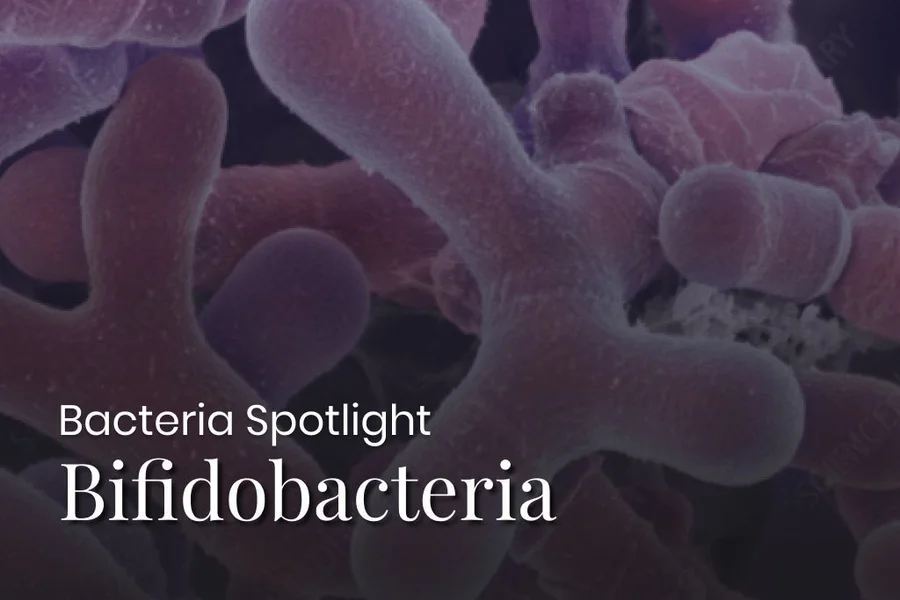
Bifidobacterium adolescentis is an anaerobic Gram-positive bacterium, a microorganism that thrives without oxygen. As a keystone species of the adult microbiome, its presence is studied for its role in carbohydrate metabolism and short-chain fatty acid (SCFA) production, which are microbial byproducts that serve as energy sources for your colon cells (Thursby & Juge, 2017). Exploring its characteristics reveals why specific bifidobacterium adolescentis benefits are a focus of research.
Carbohydrate Fermentation and SCFA Production
Bifidobacterium adolescentis breaks down complex plant oligosaccharides through the fructose-6-phosphate (F6P) phosphoketolase pathway, also known as the bifid shunt (Leser & Baker, 2017). This fermentative pathway produces acetate and L-lactate (Belenguer et al., 2006). In an in vitro co-culture study, downstream anaerobic species such as Eubacterium hallii consumed these primary metabolites and converted them into butyrate. Butyrate serves as the primary energy source for colon epithelial cells, helping reinforce gut barrier integrity (Belenguer et al., 2006). The strengthening of mucosal barrier function prevents bacterial lipopolysaccharides from entering systemic circulation and triggering low-grade inflammation (Long et al., 2021).
Metabolic Role and Bifidobacterium adolescentis Benefits
Clinical and preclinical evaluations demonstrate specific bifidobacterium adolescentis benefits for host metabolism. In an 8-week murine trial, live Bifidobacterium adolescentis supplementation alleviated high-fat diet-induced hepatic steatosis and reduced lipid accumulation by increasing Fibroblast Growth Factor 21 sensitivity (Long et al., 2021). A separate animal trial confirmed that administering Bifidobacterium adolescentis alongside Lactobacillus rhamnosus improved lipid profiles and moderated non-alcoholic fatty liver disease markers (Wang et al., 2020).
Bifidobacterium adolescentis Health Benefits in AMILI Products
AMILI incorporates precision microbiome research into targeted health solutions. AMILI's Metabolic Health formulation combines probiotic strains, prebiotics, postbiotics and targeted botanical ingredients to support metabolic health, including fat metabolism, glucose control and cholesterol health (AMILI, n.d).
These bifidobacterium adolescentis health benefits translate multi-ethnic Asian microbiome science into everyday wellness solutions.
Glossary
- Anaerobic: Organisms that live and grow in environments devoid of oxygen.
- Bifid Shunt: The metabolic pathway unique to bifidobacteria that converts hexose sugars into acetate and lactate.
- Butyrate: A short-chain fatty acid produced by colonic bacterial fermentation that acts as the primary fuel source for colon epithelial cells and helps maintain intestinal wall integrity.
- Hepatic Steatosis: An excessive accumulation of triglycerides and other fats within liver cells, often associated with metabolic dysfunction.
- Short-Chain Fatty Acids: Organic fatty acids produced by gut microbiota during the fermentation of non-digestible carbohydrates.
Frequently asked questions
References
- 1.AMILI. (n.d.). Metabolic health. https://amili.asia/products/metabolic-health-formulation?region=my
- 2.Belenguer, A., Duncan, S. H., Calder, A. G., Holtrop, G., Louis, P., Lobley, G. E., & Flint, H. J. (2006). Two routes of metabolic cross-feeding between Bifidobacterium adolescentis and butyrate-producing anaerobes from the human gut. Applied and Environmental Microbiology, 72(5), 3593–3599. https://doi.org/10.1128/aem.72.5.3593-3599.2006
- 3.Leser, T., & Baker, A. (2017). Bifidobacterium adolescentis – a beneficial microbe. Beneficial Microbes, 14(3), 525–551.
- 4.Long, X., Liu, D., Gao, Q., Ni, J., Qian, L., Ni, Y., Fang, Q., Jia, W., & Li, H. (2021). Bifidobacterium adolescentis alleviates liver steatosis and steatohepatitis by increasing fibroblast growth factor 21 sensitivity. Frontiers in Endocrinology, 12, 773340. https://doi.org/10.3389/fendo.2021.773340
- 5.Thursby, E., & Juge, N. (2017). Introduction to the human gut microbiota. Biochemical Journal, 474(11), 1823–1836. https://doi.org/10.1042/BCJ20160510
- 6.Wang, G., Jiao, T., Xu, Y., Li, D., Si, Q., Hao, J., Zhao, J., Zhang, H., & Chen, W. (2020). Bifidobacterium adolescentis and Lactobacillus rhamnosus alleviate non-alcoholic fatty liver disease induced by a high-fat, high-cholesterol diet through modulation of different gut microbiota-dependent pathways. Food & Function, 11(7), 6115–6127. https://doi.org/10.1039/c9fo02905b
This article is for general information and does not replace advice from your doctor. Speak to a healthcare professional before making changes to your treatment.
Written
Written by
Yuzu Tay
Yuzu Tay is a science communicator trained in biomedical engineering and leads marketing and communications at AMILI.