

How to Choose a Probiotic That Works for You: A Methodical Approach
How to Choose a Probiotic That Works for You: A Methodical Approach
Some people feel a clear difference from taking probiotics and others notice nothing, even with the same product, because every gut is different. The useful question is a personal one: which probiotic is likely to work for you, and how you would know. Here is a 5-step way to choose one that fits your goal and your gut, and to check whether it is suitable for you.
The problem with picking a probiotic today
Choosing a probiotic to buy, try, or take is harder than it looks. The shelves are crowded and quality varies widely from product to product. Familiar-sounding bacteria carry a healthy reputation, partly because the same families used in supplements, mostly Lactobacillus and Bifidobacterium, live in fermented foods and also occur naturally in the human gut. While fermented foods like kimchi, kombucha, and kefir contain live microbes, but they usually fall short of the bar that defines a probiotic, because their benefits have not been confirmed and linked to specific microbes.
Three things make the choice genuinely hard.
- Benefits are specific to individual strains and may not carry across the bacteria family.
- A well-chosen strain can still fail if the format does not keep it alive through the stomach.
- Individual response varies enough that no product can be promised to work for you in advance.
Rather than guessing or trailing based on reviews and recommendations, here is a methodical approach that lets you choose the right probiotics you need based on relevant clinical evidence and then verify if is indeed beneficial for you.
Step 1: Define the outcome you want to measure
Decide what you are trying to improve, and why, before you look at any single product. A probiotic chosen against a defined goal can be easily evaluated later, but one chosen for general "gut health" is more difficult, because there is nothing to measure it against.
This also sets the foundation for identifying the right bacteria strains you need, because beneficial effects are strain-specific. A strain studied for antibiotic-associated diarrhoea might not help with symptoms like for bloating, regularity, or energy. Having clarity on what you want to achieve narrows the field from hundreds of products to the few with relevant trials behind them.
DO: State your goal as something testable and measurable. "Reduce bloating after meals" can be measured. "Feel healthier" cannot. (This is important for step 5!)
Step 2: Examine the strain and the studied dose
Two facts predict whether a product can work: the exact bacteria strain, which is the specific type of bacteria, and whether its how much of it you need to feel benefits (dose), which should be matched to the dose used in trials of that strain.
A strain is the specific sub-type of a species, written as a code after the species name, such as Lactobacillus rhamnosusGG. The efficacy and benefits for one strain does not necessarily transfer to other strains of the same species, because 10-30% of genes are different between strains, which might cause them to have different ways of adhering to the gut, how well it survives in the gut, how it communicates with the immune system, and also what fibres it processes or ferments and consequently the type of useful products (metabolites) they produce.
CFU means colony-forming units, the count of live bacteria in a dose. A larger number on a supplement bottle may seem like it would be more efficacious but that is only the case if all of them survive the gut journey to the colon. Different strains might also require different dosages for their to be impact, so the CFU count should match what studies of that specific strain used.
DO: Search for strains with published research results that match your goal Step 1, and note the dosage used in the study (as well as duration of study!)
Step 3: Confirm the format keeps the bacteria alive to where they act
The CFU printed on the label reflects the amount at manufacture or expiry, not the delivered dose that survives your gut. A probiotic only works if it reaches the part of the gut where they act. The stomach is acidic by design and kills microbes, so a live count on the label is not the same as a live count arriving in your intestine. Think of it the way you would any delivery that has to survive the journey rather than just leave the warehouse full.
Survival through stomach acid varies by strain, and some strains need protections from enteric coated pills or microencapsulation to get through. Enteric coating resists stomach acid and releases the bacteria lower down in the gut. Microencapsulation wraps the bacteria in a protective shell. For added assurance, look for third-party testing such as an NSF mark, which independently checks purity, potency, and label accuracy.
DO: Check whether the product explains how its strains survive.
Step 4: Account for the variables in your own diet and routine
A probiotic does not act in isolation, and its impact on your gut health is also shaped by your diet, other supplements, and daily habits. This is another reason why the same product can help one person and do nothing for another.
Some interactions matter in practical ways. Many probiotics are sold with prebiotics, which are fibres that feed gut bacteria. One common prebiotic, inulin, is a FODMAP and can worsen symptoms for people with IBS, so a product marketed as an upgrade can be the wrong choice for a sensitive gut. Timing with meals, consistency of dose, and what else you take alongside it all influence the result.
You are likely already adjust things like coffee or medication around your day. Treat a probiotic the same way. Before committing, map how and when you will take it, and check it against any condition you have or medication you rely on. If you are immunocompromised, seriously ill, pregnant, or choosing for an infant, involve a doctor rather than deciding alone.
DO: Find a consistent time to take your probiotics, and keep up with healthy habits.
Step 5: Verify your results over a defined period
Because response cannot be predicted for every individual, measurement on yourself is the only way to know whether a product works for you. This is what makes the method honest, and it is the one most people skip. In effect, you are running an n=1 trial, a study with a single, and the most important participant: you.
Based on your goal identified in Step 1, and track a related symptom simply. For example, you can log a short daily note on bloating, bowel regularity, mood, or energy. A baseline of one week before you begin makes any change easier to see.
Then, allow a fair trial window. Many symptom trials run 8 to 12 weeks, a reasonable length for most everyday goals. Some gut markers shift within days, symptom improvements often appear over two to eight weeks, and sustained or preventive effects are typically assessed over three to twelve months. Judging a product after a few days is judging it before the trial has begun.
At the end, read your notes against your baseline. If nothing moved on a well-chosen, correctly dosed, correctly taken product, that is a real result, and it saves you from repurchasing out of habit.
DO: Track your changes for at least 8-12 weeks, before deciding if it work for you.
The point of all this
You should know what you are taking and why. Working through strain, dose, delivery, variables, and measurement replaces other people's experiences with a method you can repeat for the next product and the one after it. It will not remove uncertainty, because biology varies between people, but it converts a guess into a test you can read.
Begin with the smallest step. Write down the one outcome you want to change, as a sentence you could measure. The method follows from there.
This article is general education, not medical advice. If you have a health condition, take medication, are pregnant, or are choosing for a child, speak with a qualified healthcare professional before starting a probiotic.
Frequently Asked Questions
How many CFU should a probiotic have?
Choose the CFU count used in clinical studies of that specific strain. Effective doses vary by strain, and a higher number on the label does not guarantee more benefit. Check the published research for your chosen strain and compare its studied dose with the dose on the label.
Are multi-strain probiotics better than single-strain ones?
More strains do not automatically make a better product. Each strain should have evidence for your goal at the dose it is included at. A single well-studied strain can be a stronger choice than a blend of many strains with little research behind them.
What is the best time of day to take a probiotic?
Take it at the same time every day, because consistency matters more than the exact hour. Some research suggests that taking certain strains with or shortly before a meal improves survival, because food helps buffer stomach acid. Follow the product's instructions if they specify timing.
How long does it take for a probiotic to work?
Symptom changes often appear within two to eight weeks, and many clinical trials run for 8 to 12 weeks. Give a product the full trial window before judging it, and compare your results against a baseline you recorded before starting.
Is it normal to feel bloated when I start taking a probiotic?
Mild gas or bloating in the first few days to two weeks is commonly reported and usually settles as your gut adjusts. If symptoms are severe, persist beyond a few weeks, or worsen, stop taking the product and speak with a healthcare professional.
Do probiotics need to be refrigerated?
It depends on the strain and how the product is made. Some strains need refrigeration to stay alive, while shelf-stable products use freeze-dried bacteria and moisture-protective packaging. Store the product as the label directs, since poor storage reduces the live count before you take it.
Can I take probiotics while on antibiotics?
Many people do, but the timing matters because antibiotics can kill probiotic bacteria. A common approach is to take the probiotic at least two hours apart from each antibiotic dose. Check with your doctor or pharmacist about your specific medication.
Do I need to take probiotics forever?
Most probiotic strains do not settle permanently in the gut, so their effects often fade after you stop. If a product works for you, you may need to keep taking it to maintain the benefit. Your Step 5 tracking can also show you what changes when you stop.
Can I get enough probiotics from fermented foods instead?
Fermented foods like kimchi, kefir, and kombucha contain live microbes and can be part of a healthy diet. Their microbes and amounts vary from batch to batch, and most have not been tested for specific benefits. If you have a specific goal, a probiotic with a studied strain and dose is easier to evaluate.
Glossary
CFU (colony-forming units): The number of live bacteria in one dose, as shown on the label. It reflects the count at manufacture or expiry, which can be higher than the number that survives to your gut.
Colon: The main part of the large intestine, where most gut bacteria live and where many probiotics act.
Enteric coating: A capsule coating that resists stomach acid and dissolves lower in the gut, so the bacteria are released where they act.
FODMAP: A group of fermentable carbohydrates that some people absorb poorly. They can trigger bloating, gas, or discomfort, especially in people with IBS.
Fermented food: Foods made with live microbes, such as kimchi, kefir, and kombucha. Most have not been tested for specific health benefits, so they do not meet the definition of a probiotic.
Genus: The broad group a bacterium belongs to, such as Lactobacillus or Bifidobacterium. It is the first word in a bacterium's scientific name.
Gut microbiome: The community of bacteria, fungi, and other microbes living in your digestive tract, along with their genes.
IBS (irritable bowel syndrome): A common digestive condition that involves recurring abdominal pain along with changes in bowel habits.
Metabolites: Substances bacteria produce as they break down food and fibre. Examples include short-chain fatty acids such as butyrate.
Microencapsulation: A method of wrapping bacteria in a protective shell so more of them survive stomach acid.
NSF certification: An independent third-party mark that checks a supplement's purity, potency, and label accuracy.
Postbiotic: A preparation of non-living microbes or their components that provides a health benefit.
Prebiotic: A substance, usually a type of fibre, that your gut microbes selectively use in a way that benefits your health.
Probiotic” Live microorganisms that provide a health benefit when taken in adequate amounts. This is the internationally accepted scientific definition.
Species: The level of classification below genus, such as Lactobacillus rhamnosus. It is the second word in the scientific name.
Strain: A specific sub-type of a species, identified by a code after the species name, such as L. rhamnosus GG. Benefits are linked to individual strains.
Synbiotic: A product that combines live microbes with a substance those microbes use, often a probiotic paired with a prebiotic.
About the Author
Yuzu holds a bachelor's in biomedical engineering and writes on the science behind the latest in healthcare, translating clinical research into practical guidance. Her past work spans cancer companion diagnostics, liver fibrosis, and gut health.
Last updated: 23rd September 2026
Articlesyoumightbeinterestedin

Bacterial Spotlight: All About Bifidobacteria
Learn what Bifidobacteria do in your gut, how levels change from infancy to old age, and how prebiotic fibres and resistant starch help them grow.
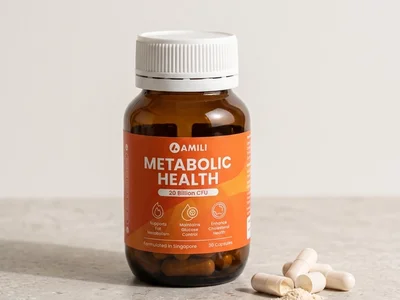
Unity, AMILI launch Asian Gut Microbiome-inspired synbiotics for metabolic health
Unity has partnered with homegrown microbiome supplement firm AMILI in an exclusive symbiotic supplement retail launch, against the backdrop of growing consumer concerns around metabolic health.

Unity partners with AMILI to bring Asia's precision health science to Singaporeans
Unity partners with AMILI to bring Asia's precision health science to Singaporeans, with new Metabolic Health Probiotics available exclusively through Unity's Wellness retail pharmacies