

Metagenomics and metabolomic profiling reveals potential biomarkers for early detection of HCC
Integrative metagenomics and metabolomic profiling reveals potential biomarkers for early detection of hepatocellular carcinoma (HCC)
Sekar, K., Lee, J. W. J., Xu, L., Liew, Y. M. R., Sim, Y. K., Chong, S. L., Chia, P. C. Y., Chang, J. P. E., Wu, L., Seshachalam, V. P., Toh, Q. K., Chew, S. L., Chew, S. C., Chiow, A., Chong, Q. F., Choo, J. W. S., De Roza, M. A., Shelat, V. G., Goh, B. K. P., … Chow, P. (2025, September 19–20). Integrative metagenomics and metabolomic profiling reveals potential biomarkers for early detection of hepatocellular carcinoma (HCC) [Poster presentation]. SingHealth Duke-NUS Scientific Congress 2025, Academia, SGH Campus, Singapore.
BACKGROUND AND AIMS: Hepatocarcinoma (HCC), the third leading cause of cancer-related deaths, is often diagnosed at advanced stages with limited treatment options. While gut microbiome-derived metabolites are implicated in liver disease progression, the interplay between microbial dysbiosis, host metabolism, and HCC pathogenesis remains unclear. This study aimed to identify gut microbiome and plasma metabolite correlations as potential biomarkers for HCC development.
METHODOLOGY: We conducted a pilot multi-omics analysis within AHCC10: The ELEGANCE Study (NCT04965259), a longitudinal cohort of 2,000 high-risk patients for hepatocellular carcinoma (HCC) in Singapore (2021–2025). Using a pilot of 270 patients (181 controls, 35 developed HCC, 54 HCC cases), shotgun metagenomics sequencing was performed, and targeted LC–MS metabolomics profiling (bile acids, tryptophan derivatives, amino acids, choline metabolites) was conducted on 247 plasma samples from 105 patients. Correlation analyses of paired microbiome–metabolome data from these 105 patients assessed associations between gut taxa and circulating metabolites.
RESULTS: Metabolomic profiling identified significantly elevated levels of specific bile acids, amino acids, and tryptophan metabolites in individuals who later developed HCC, detectable before clinical diagnosis (FDR < 0.05, log₂|FC| > 1.2). Notably, conjugated bile acids including TCA, GCA, TDCA, and GCDCA and certain amino acids like tyrosine and tryptophan metabolism by products like kynurenine were consistently elevated in plasma as early as 3 years to as close as 6 months before clinical diagnosis of HCC.
Shotgun Metagenomics analysis identified distinct microbial taxa between HCC patients, patients without HCC (controls) and patients who progressed to HCC. PLSDA plot showing bacterial species and abundance in each sample, clustered by distinct subgroups, suggesting pre-diagnostic signatures relating to cancer development and the gut-liver axis.
Our integrative microbiome and metabolome analysis shows that the metabolic changes were strongly correlated with alterations in the gut microbiome. Specifically, there was a notable depletion of microbial taxa such as Bacteroides, Clostridiaceae, and Erysipelotrichaceae, which are known to express bile salt hydrolases (BSHs) that mediate bile acid deconjugation. This depletion was significantly associated with increased levels of conjugated bile acids (TCA, GCA, TDCA, GCDCA) in plasma. Furthermore, elevated levels of tryptophan-derived microbial metabolites such as kynurenine, indole-3 methyl acetate were positively correlated with the abundance of Lachnospiraceae, Aerostipes and Ruthenibacterium in stool samples. These patterns suggest microbial dysbiosis associated with impaired intestinal barrier integrity, altered bile acid and energy metabolism, and immune evasion.
CONCLUSION: Our integrative multi-omics analysis revealed that specific gut microbiome alterations and associated plasma metabolites precede the clinical onset of HCC. These findings highlight potential early biomarkers and suggest mechanistic links through which microbial dysbiosis may contribute to HCC development, offering new avenues for early detection and prevention strategies.
Articlesyoumightbeinterestedin
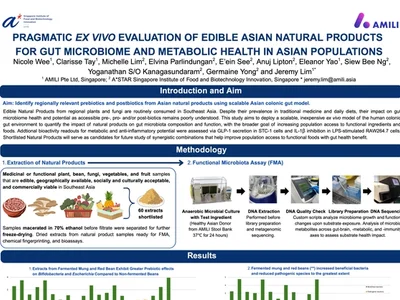
Evaluation of edible Asian natural products for gut microbiome and metabolic health
20th Singapore Public Health & Occupational Medicine Conference (2026)

Importance of a Healthy Gut Microbiome in Pregnant Mothers
Mothers have brought life into this world by carrying all of us inside their wombs with care and love. Today, we will be looking at the beginning of motherhood — pregnancy.
Diabetes and the Gut Microbiome
One of the ways your diet affects your health status is by modulating the composition of your gut microbiota. It has been found that normal gut microbiota affects the development of the immune system, nutrient absorption, tissue generation and bone homeostasis metabolism.