

Evaluation of edible Asian natural products for gut microbiome and metabolic health
Pragmatic ex vivo evaluation of edible Asian natural products for gut microbiome and metabolic health in Asian populations
Wee, N., Tay, C., Lim, M., Parlindungan, E., See, E., Lipton, A., Yao, E., Ng, S. B., Kanagasundaram, Y. S., Yong, G., & Lim, J. (2026). Pragmatic ex vivo evaluation of edible Asian natural products for gut microbiome and metabolic health in Asian populations [Poster presentation]. 20th Singapore Public Health & Occupational Medicine Conference.
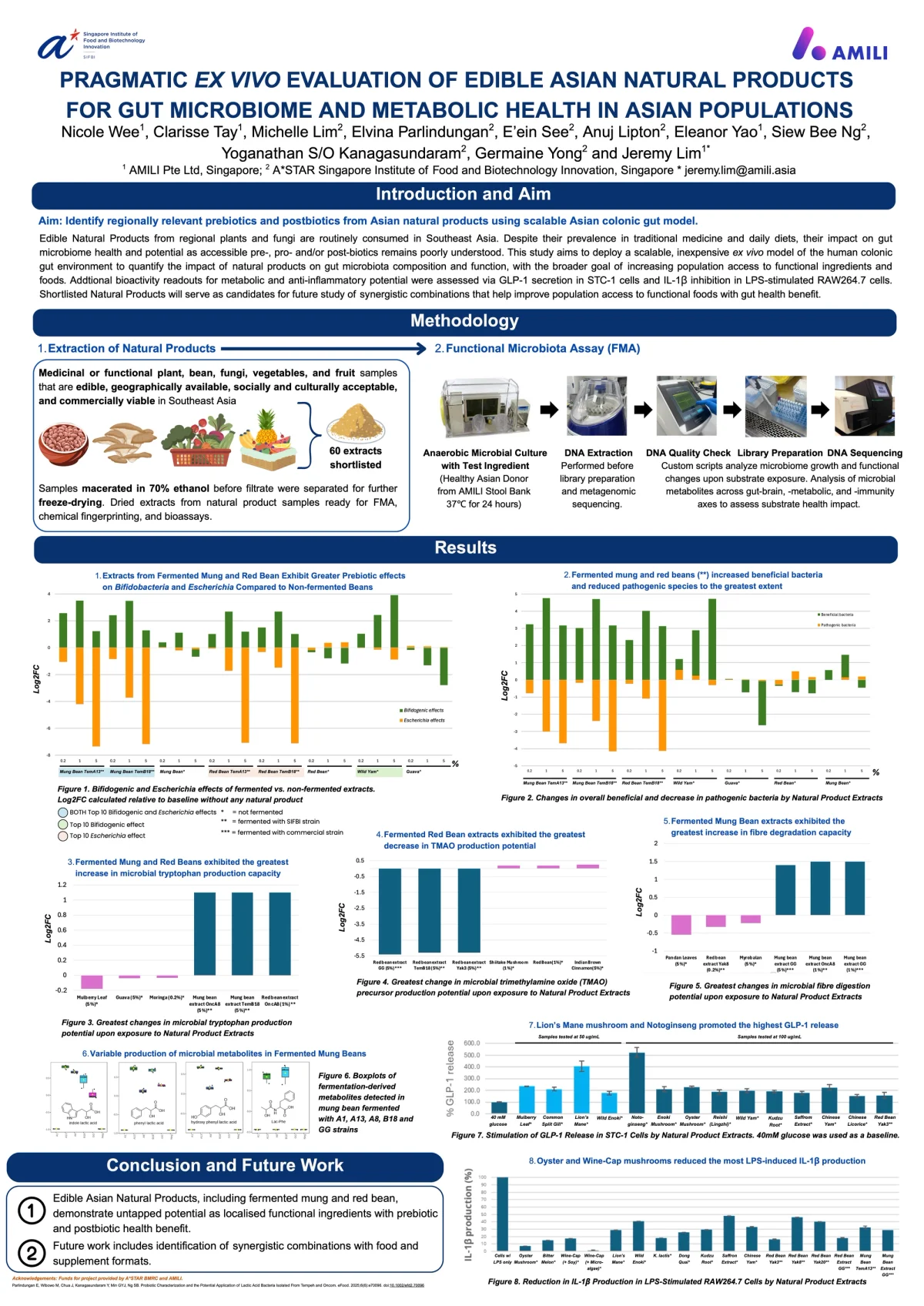
AIM: Identify regionally relevant probiotics and postbiotics from Asian natural products using Asian colonic gut model.
INTRODUCTION: Edible Natural Products from regional plants and fungi are routinely consumed in Southeast Asia. Despite their prevalence in traditional medicine and daily diets, their impact on gut microbiome health and potential as accessible preo-, pro-, and/or post-biotic remains poorly understood. This study aims to deploy a scalable, inexpensive ex vivo model of the human colonies gut environment to quantify theimapct of natural products on gut microbiota composition and function, with the broader goal of increasing population access to functional ingredients and foods. Addition bioactivity readouts for metabolic and anti-inflammatory potential were assessed via GLP-1 secretion in STC-1 cells and IL-1B inhibition in LPS-stimulated RAW264.7 cells. Shortlisted Natural Products will serve as candidates for future study of synergistic combinations that help improve population access to functional foods with gut health benefit.
METHODOLOGY:
1. Extraction of Natural products. Medicinal or functional plant, bean, fungi, vegetables, and fruit samples that are edible, geographically available, socially and culturally acceptable, and commercially viable in Southeast East Asia are shortlisted. Samples macerated in 70% ethanol before filtrate were separated for further freeze-drying. Dried extract from natural product samples ready for Functional Microbiota Assay (FMA), chemical fingerprinting, and bioassays.
2. Functional Microbiota Assay (FMA).
- Anaerobic microbial culture with test ingredients using healthy Asian donor material from AMILI Stool Bank
- DNA extraction, quality check, library preparation, and sequencing. Custom scripts analyse microbiome growth and functional changes upon substrate exposure. Analysis of microbial metabolites across gut-brain, metabolic, and immunity axes to assess substrate health impact.
RESULTS:
- Extracts from fermented mung and red bean exhibit greater prebiotic effects on Bifidobacteria and Escherichia compared to non-fermented beans
- Fermented mung and red beans increased beneficial bacteria and reduced pathogenic species to the greatest extent
- Fermented mung and red beans exhibited the greatest increase in microbial tryptophan production capacity
- Fermented red bean extracts exhibited the greatest decrease in TMAO production potential
- Fermented mung bean extracts exhibited the greater increase in fibre degradation capacity
- Variable production of microbial metabolites in fermented mung beans
- Lion’s mane mushroom and notoginseng promoted the highest GLP-1 release
- Oyster and wine-cap mushrooms reduced the most LPS-induced IL-1B production
CONCLUSION: Edible Asian Natural Products, including fermented mung and red bean, demonstrate untapped potential as localised functional ingredients with prebiotics and postbiotic health benefit. Future work includes identification of synergistic combinations of food and supplement formats.
Articlesyoumightbeinterestedin

Bridging Ancient Wisdom and Precision Health: TCM Body Constitution, the Gut Microbiome and AI
TCM body constitution groups people by traits such as energy, build, digestion, sleep and mood, and studies now link these types to distinct gut bacteria.

Importance of a Healthy Gut Microbiome in Pregnant Mothers
Mothers have brought life into this world by carrying all of us inside their wombs with care and love. Today, we will be looking at the beginning of motherhood — pregnancy.

Diabetes and the Gut Microbiome
One of the ways your diet affects your health status is by modulating the composition of your gut microbiota. It has been found that normal gut microbiota affects the development of the immune system, nutrient absorption, tissue generation and bone homeostasis metabolism.