
Determinants of Post-prandial Glycemic and Gut Microbiome Responses
BACKGROUND
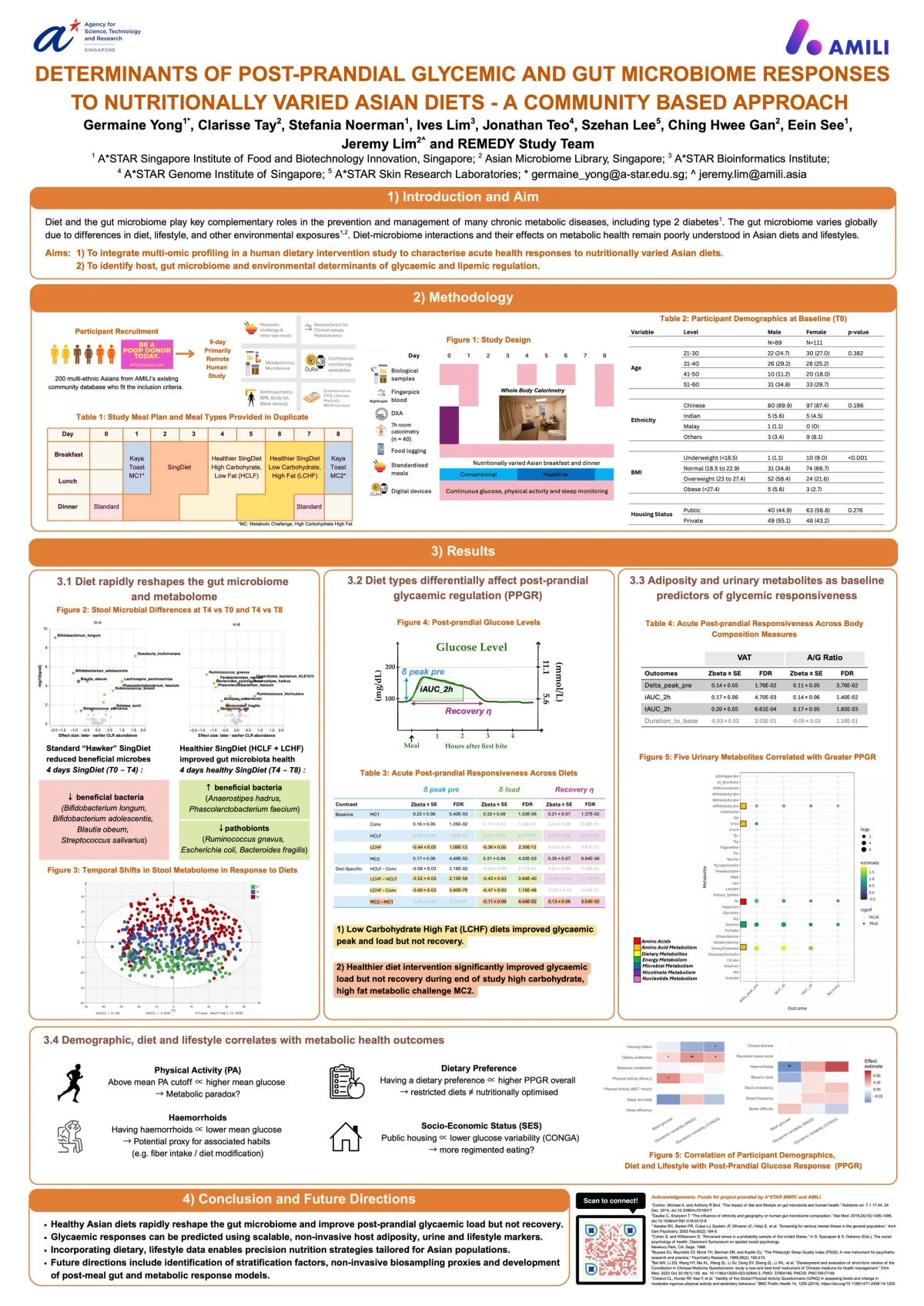
Diet and the gut microbiome play key complementary roles in the prevention and management of many chronic metabolic diseases, including type 2 diabetes. Diet-microbiome interactions and their effects on metabolic health remain poorly understood in Asian diets and lifestyles. This study aims to identify factors explaining inter-individual variation in postprandial glycemia responses (PPGR) to nutritionally varied Asian meals.
METHODS
200 clinically healthy Asian adults (21-60 years old) were fully fed breakfast, lunch and dinner throughout a 9-day period with nutritionally varied Asian meals representative of both conventional and healthier habitual diets in Singapore. Participants were tracked continuously for sleep, physical activity and postprandial blood glucose and lipids. Stool, saliva, blood, urine and skin tapes were collected throughout the study and analysed for metagenomic and/or metabolomic profiles.
RESULTS
Conventional and healthier Singapore diets rapidly changed gut microbiome profiles within 48 hours. Following consumption of healthier local meals for four days, participants challenged with a high fat, high carbohydrate Metabolic Challenge meal demonstrated significantly improved PPGR load despite longer recovery times. Participant baseline visceral adiposity positively correlated with PPGR amplitude but not recovery.
CONCLUSION
PPGR among Asians is highly personalised - baseline visceral adiposity may serve as a biomarker to identify individuals at risk of poorer PPGR. Healthier Asian diets significantly improved gut and metabolic health within a short time window of four days or less. Further study, including of temporal changes in gut microbiome and metabolic features, is needed to elucidate factors that explain response variation.