

Bridging Ancient Wisdom and Precision Health: TCM Body Constitution, the Gut Microbiome and AI
Bridging Ancient Wisdom and Precision Health: TCM Body Constitution, the Gut Microbiome and AI
"In recent years, we are learning that the microbiome which exists on our body and inside our body plays a very important role in our health. What we eat and drink, the environment in which we live, and our psychological state, all affect both our body and the microbiome. The efficacy of Chinese Medicine is much more easily understood once we take the microbiome into account. AI will greatly increase our understanding of the way the microbiome affects our overall health." Former Singapore Health Minister George Yeo, in his address at the 2026 World Congress of Chinese Medicine.
Why do people respond differently to the same food?
Traditional Chinese Medicine (TCM) has long recognised such variability through body constitution theory, which categorises individuals according to their physical, physiological and psychological characteristics and links these to illness susceptibility and treatment response, though underlying biological mechanisms remain unclear.
In short:
- TCM body constitution groups people by traits such as energy, build, digestion, sleep and mood, and studies now link these types to distinct gut bacteria.
- A phlegm-dampness constitution, which TCM links to metabolic problems, has been associated with less diverse gut bacteria and fewer Flavonifractor plautii.
- A Qi deficiency constitution has been associated with fewer fibre-fermenting bacteria, higher stress and poorer sleep.
- Everyday TCM foods such as Chinese yam, lotus leaf and orange peel are being studied for how they change what gut bacteria produce.
Is your TCM body constitution linked to your gut microbiome?
Gut microbiome science offers a way to study this framework. The microbiome influences metabolism, immunity and production of bioactive compounds, with emerging evidence suggesting that different TCM constitutions are associated with distinct microbial characteristics. A 2025 Cell Discovery study found reduced abundance of Flavonifractor plautii and its associated metabolite phytosphingosine in individuals with phlegm-dampness constitution, a phenotype traditionally associated with metabolic dysfunction. Locally, AMILI's 2021 study of 211 healthy participants from Singapore showed lower microbial diversity and increased abundance of pro-inflammatory microbes, including Fusobacterium mortiferum and Sutterella wadsworthensis, in phlegm-dampness individuals.
Qi deficiency constitution and the gut
Extending these insights to well-being, our research presented at the International Digestive Disease Forum 2026 and the Public Health and Occupational Medicine Conference 2026 examined over 1,500 subjects. It was observed that Qi-deficient individuals possessed lower relative abundance of fibre-fermenting, short-chain fatty acid-associated bacteria (such as Lachnospira eligens), alongside enrichment of pro-inflammatory microbes like Enterocloster bolteae. The body constitution was also associated with perceived stress, psychological distress and sleep quality. While observational, these findings suggest that constitution-based phenotyping captures meaningful biological and psychosocial variations worthy of further investigation.
Food as medicine: what science says about Chinese yam, lotus leaf and orange peel
Beyond characterising constitutions, microbiome science offers opportunities to investigate the traditional concept of food as medicine (药食同源), where everyday ingredients, such as ginger, garlic, and turmeric, also serve as TCM therapeutics. Chinese yam (淮山, huai shan), traditionally used to support digestion, contains polysaccharides with demonstrated prebiotic potential that modulate microbial fermentation and short-chain fatty acid production. Similarly, lotus leaf (荷叶, he ye), long associated with weight management, yields bioactive compounds that have shown beneficial effects on lipid metabolism and gut microbial composition in preclinical studies.
Extending this framework, our 2024 AMILI study investigated orange peel, widely featured in both Asian culinary traditions and traditional approaches for managing phlegm-dampness. We found that this prebiotic fibre significantly boosted microbial metabolic capacity, enhancing the production of substances linked to mood and sleep regulation, intestinal barrier integrity, and B-vitamin synthesis. Furthermore, it supported pathways associated with immune modulation, antioxidant activity, and favourable profiles regarding glycaemic and allergic responses.
Why does the same food affect people differently?
In this sense, food is medicine, but its mechanisms are often complex. Could differences in an individual's baseline microbiome, together with these factors, explain why the same foods produce different biological responses between people?
How can AI bring TCM and microbiome science into daily life?
The use of Artificial Intelligence (AI) offers a powerful way to apply these scientific concepts and important findings into daily life. By integrating metagenomic profiles, metabolites and clinical characteristics, predictive models could identify microbial signatures associated with balanced and unbalanced constitutions. More importantly, combining constitution assessments with controlled dietary and herbal interventions could help predict individual differences in microbial metabolism and physiological responses.
AMILI Optimise is an AI-enabled precision health solution that is making the science applicable for the masses. It combines insights of each individual's gut microbiome with their lifestyle, goals and habits to generate tailored recommendations and ongoing adaptive guidance. Grounded in scientific research on biological pathways and relevant health frameworks, including TCM, it translates complex science into practical recommendations for daily nutrition and lifestyle habits. Early participants of AMILI Optimise have reported improvements in weight, blood glucose control, appetite regulation and energy levels.
With the advancements of frontier science and technology, integrating TCM, microbiome science and artificial intelligence could transform traditional observations into scientifically testable hypotheses, laying the foundation for evidence-based, personalised food and herbal medicine.
This article is for general information and isn't a substitute for personalised medical advice. If you have ongoing gut symptoms, or plan to take TCM herbs alongside medication, speak with a doctor.
Frequently Asked Questions
- What are the 9 body constitutions in TCM?
Balanced, Qi deficiency, Yang deficiency, Yin deficiency, phlegm-dampness, damp-heat, blood stasis, Qi stagnation and inherited special. Most people have one main type, often with features of another. - What is a phlegm-dampness body type?
A TCM constitution marked by a heavier build, a soft belly, feeling heavy or sluggish and oily skin. TCM links it to metabolic problems, and studies have associated it with less diverse gut bacteria. - What is Qi deficiency?
A TCM constitution marked by low energy, tiring easily, shortness of breath with effort and frequent colds. It has been associated with fewer fibre-fermenting gut bacteria, higher stress and poorer sleep. - How do I find out my TCM body constitution?
A TCM practitioner can assess it, usually with a standard questionnaire such as the Constitution in Chinese Medicine Questionnaire alongside a consultation. Self-assessment versions exist, but a practitioner can account for mixed types. - Can your gut bacteria change your body constitution?
That is not yet known. Studies in people show the two are associated, and mouse studies suggest specific bacteria can affect metabolic traits linked to phlegm-dampness. - Is chenpi good for gut health?
Lab research suggests citrus peel fibre can feed gut bacteria and change what they produce, but human trials on chenpi and the gut are few. Used in cooking, it is an easy way to add variety to the plant foods you eat. - What does medicine food homology mean?
It is the TCM principle (药食同源) that many everyday foods also serve as medicine. Ginger, Chinese yam and chenpi are common examples.
Glossary
- Gut microbiome: The community of bacteria and other microbes living in your digestive tract, along with their genes.
- Medicine food homology (药食同源): The TCM principle that many everyday foods also serve as medicine.
- Metabolite: A compound produced when bacteria or the body break down food or other substances.
- Phlegm-dampness constitution: A TCM body constitution marked by a heavier build, a soft belly, feeling heavy or sluggish and oily skin, which TCM links to metabolic problems.
- Phytosphingosine: A fat-related compound made by some gut bacteria, including Flavonifractor plautii, and involved in fat and sugar metabolism.
- Polysaccharide: A complex carbohydrate made of many sugar units. Some types can be fermented by gut bacteria.
- Prebiotic: A substance that gut bacteria selectively use in a way that benefits health.
- Qi deficiency constitution: A TCM body constitution marked by low energy, tiring easily, shortness of breath with effort and frequent colds.
- Short-chain fatty acids: Compounds gut bacteria make when they ferment fibre, which feed the cells lining your colon and help regulate inflammation.
- TCM body constitution: A way of grouping people in traditional Chinese medicine by physical, physiological and psychological traits, used to judge illness tendencies and responses to food and treatment.
About the Authors
Toh Kai Yee, Justin Wong
References
- Li, Lingru, et al. "A Decrease in Flavonifractor plautii and Its Product, Phytosphingosine, Predisposes Individuals with Phlegm-Dampness Constitution to Metabolic Disorders." Cell Discovery, vol. 11, no. 1, 2025, https://doi.org/10.1038/s41421-025-00789-x.
- Wang, Qi. "Classification and Diagnosis Basis of Nine Basic Constitutions in Chinese Medicine." Journal of Beijing University of Traditional Chinese Medicine, vol. 28, no. 4, 2005, pp. 1-8.
Articlesyoumightbeinterestedin
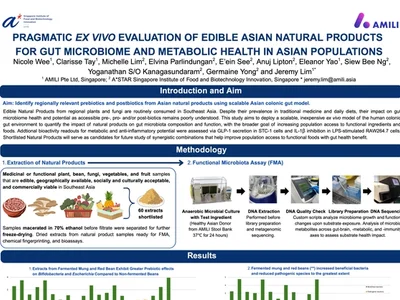
Evaluation of edible Asian natural products for gut microbiome and metabolic health
20th Singapore Public Health & Occupational Medicine Conference (2026)

Importance of a Healthy Gut Microbiome in Pregnant Mothers
Mothers have brought life into this world by carrying all of us inside their wombs with care and love. Today, we will be looking at the beginning of motherhood — pregnancy.
Diabetes and the Gut Microbiome
One of the ways your diet affects your health status is by modulating the composition of your gut microbiota. It has been found that normal gut microbiota affects the development of the immune system, nutrient absorption, tissue generation and bone homeostasis metabolism.