Anti-inflammatory effects on gut microbiome by chrysanthemum and licorice beverage
Anti-inflammatory effects on gut microbiome by chrysanthemum and licorice beverage
Toh, K. Y., Tan, S. C., Tan, G., Rasiti, H., Toh, T. S., Dwiyanto, J., Chong, C. W., & Lim, J. (2024). Anti-inflammatory effects on gut microbiome by chrysanthemum and licorice beverage [Poster presentation]. 9th Microbiome R&D and Business Collaboration Congress.
INTRODUCTION
Chrysanthemum tea and Chinese licorice are widely known for health benefits in human and frequently consumed as food for therapeutics effects. In recent years, chrysanthemum and licorice were reported to habour anti-inflammatory beneficial effects for metabolic and inflammatory diseases such as Type 2 diabetics, ulcerative colitis, non-alcoholic fatty liver disease. However such studies were often done independently of the two ingredients and often in animal models , and lesser extend in human.
OBJECTIVE
This study aimed to investigate the effects on gut microbiome in healthy individuals who consume a commercially available beverage in Singapore containing only chrysanthemum and licorice (CTL).
METHODS
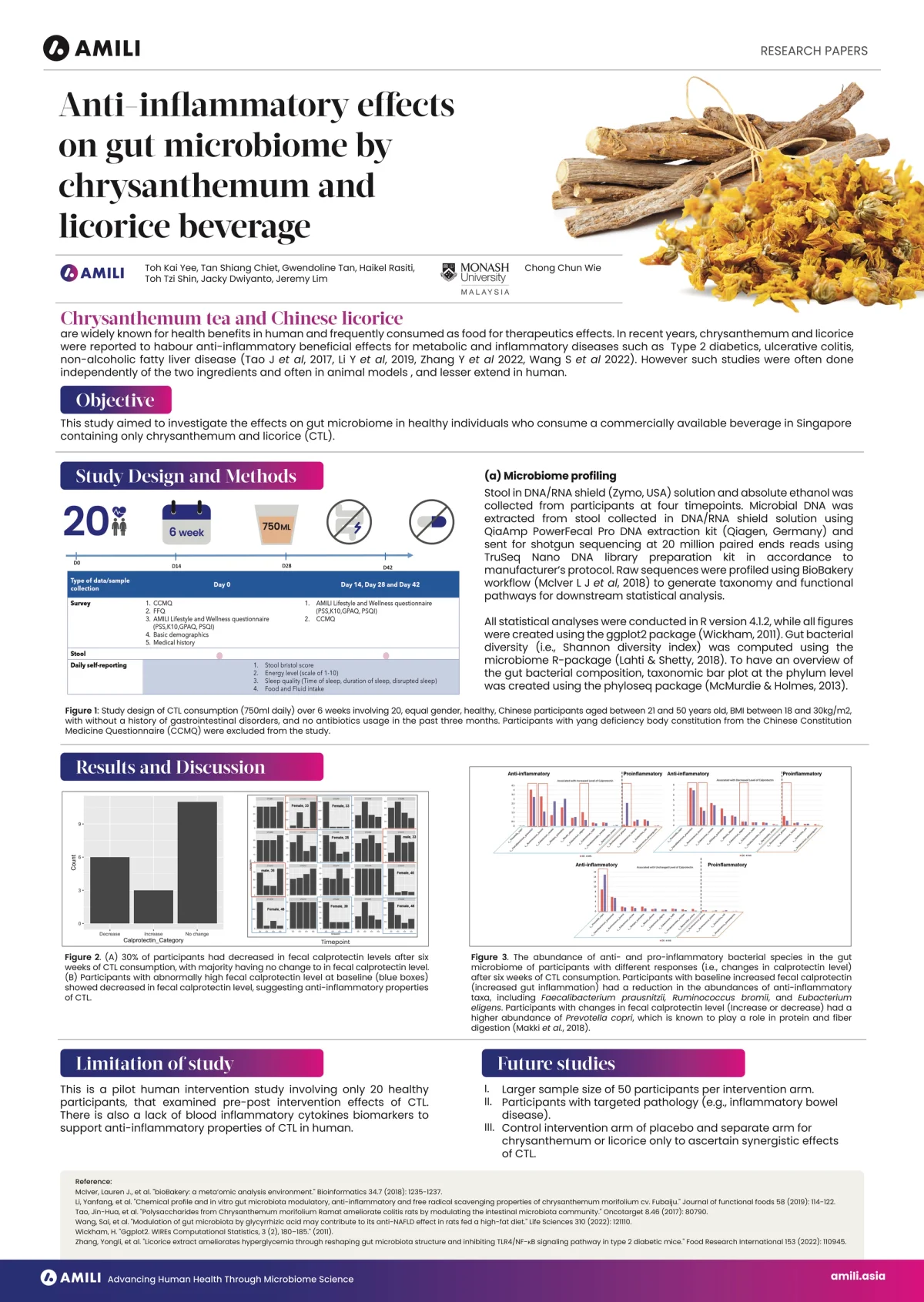
Study design of CTL consumption (750ml daily) over 6 weeks involving 20, equal gender, healthy, Chinese participants aged between 21 and 50 years old, BMI between 18 and 30kg/m2, with without a history of gastrointestinal disorders, and no antibiotics usage in the past three months. Participants with yang deficiency body constitution from the Chinese Constitution Medicine Questionnaire (CCMQ) were excluded from the study.
Microbiome profiling: Stool in DNA/RNA shield (Zymo, USA) solution and absolute ethanol was collected from participants at four timepoints. Microbial DNA was extracted from stool collected in DNA/RNA shield solution using QiaAmp PowerFecal Pro DNA extraction kit (Qiagen, Germany) and sent for shotgun sequencing at 20 million paired ends reads using TruSeq Nano DNA library preparation kit in accordance to manufacturer's protocol. Raw sequences were profiled using BioBakery workflow (McIver L J *et al*, 2018) to generate taxonomy and functional pathways for downstream statistical analysis.
All statistical analyses were conducted in R version 4.1.2, while all figures were created using the ggplot2 package (Wickham, 2011). Gut bacterial diversity (i.e., Shannon diversity index) was computed using the microbiome R-package (Lahti & Shetty, 2018). To have an overview of the gut bacterial composition, taxonomic bar plot at the phylum level was created using the phyloseq package (McMurdie & Holmes, 2013).
RESULTS
30% of participants had decreased in fecal calprotectin levels after six weeks of CTL consumption, with majority having no change to in fecal calprotectin level. Participants with abnormally high fecal calprotectin level at baseline (blue boxes) showed decreased in fecal calprotectin level, suggesting anti-inflammatory properties of CTL.
The abundance of anti- and pro-inflammatory bacterial species in the gut microbiome of participants with different responses (i.e., changes in calprotectin level) after six weeks of CTL consumption. Participants with baseline increased fecal calprotectin (increased gut inflammation) had a reduction in the abundances of anti-inflammatory taxa, including Faecalibacterium prausnitzii, Ruminococcus bromii, and Eubacterium eligens. Participants with changes in fecal calprotectin level (Increase or decrease) had a higher abundance of Prevotella copri, which is known to play a role in protein and fiber digestion (Makki et al., 2018).
LIMITATIONS
This is a pilot human intervention study involving only 20 healthy participants, that examined pre-post intervention effects of CTL. There is also a lack of blood inflammatory cytokines biomarkers to support anti-inflammatory properties of CTL in human.
FUTURE STUDIES
I. Larger sample size of 50 participants per intervention arm.
II. Participants with targeted pathology (e.g., inflammatory bowel disease).
III. Control intervention arm of placebo and separate arm for chrysanthemum or licorice only to ascertain synergistic effects of CTL.