Post-prandial glycemic and gut microbiome responses to nutritionally varied Asian diets
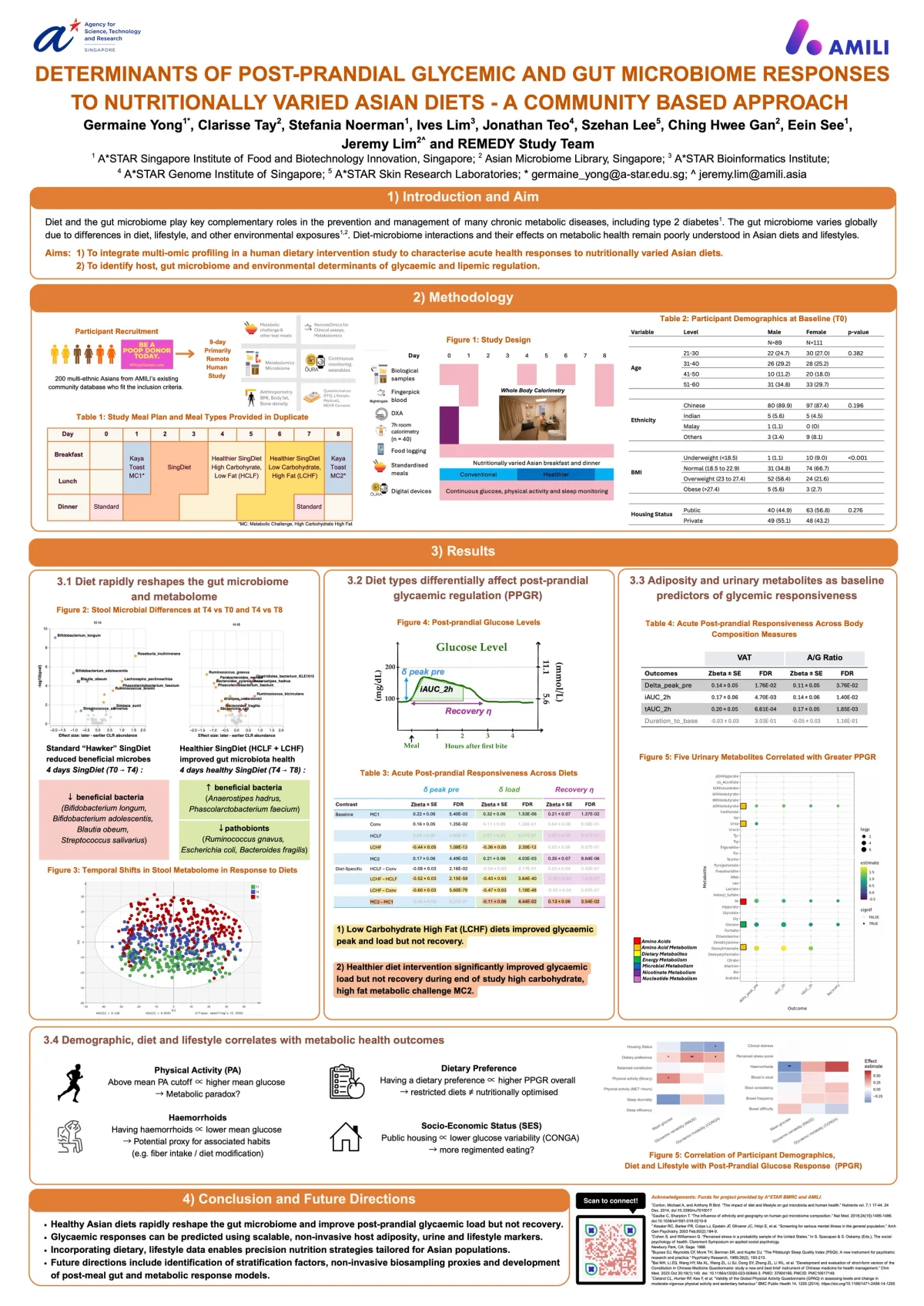
Determinants of post-prandial glycemic and gut microbiome responses to nutritionally varied Asian diets - a community based approach
INTRODUCTION: Diet and the gut microbiome play complementary roles in the prevention and management of many chronic metabolic diseases, including the 2 diabetes. The gut microbiome varies gloabally due to difference in diet, lifestyle, and other environmental exposures. Diet-microbiome interactions and their effects on metabolic health remain poorly understood in Asian diets and lifestyles.
AIM:
- To integrate multi-mic profiling in a human dietary intervention study to characterise acute health responses to nutritionally varied Asian diets.
- To identify host, gut microbiome, and environmental determinants of glycemic and lipemic regulation.
RESULTS:
- Diet rapidly reshapes the gut microbiome and metabolome
- Diet types differentially affect post-prandial glycemic regulation. Low carbohydrate high fat (LCHF) diets improved glycaemic peak and load but not recovery. Healthier diet intervention significantly improved glycemic load but not recovery during end of study high carbohydrate, high fat metabolic challenge MC2.
- Adiposity and urinary metabolites as baseline predictors of glycemic reponses
- Demographic, diet, and lifestyle correlates with metabolic health outcomes.
CONCLUSION AND FUTURE DIRECTIONS: Healthy asian diet rapidly reshape the gut microbiome and improve post-prandial glycemic load but not recovery. Glycemic responses can be predicted using scalable, non-invasive host adiposity, urine, and lifestyle markers. Incorporating dietary, lifestyle data enables precision nutrition strategies tailored for Asian populations. Future directions include identification of stratification factors, non-invasive biosampling proxies and development of post-meal gut and metabolic response models.